Intelligent building automation integrates all technical systems for greater efficiency and sustainability
The ZIN in Noord campus combines restaurants, office and commercial space, over 120 apartments, and a hotel with 240 rooms to create an urban center for living and working. VMA, an expert in multi-technical systems and technologies, utilized the openness and performance capability of PC-based control technology from Beckhoff for the automation of this highly efficient and sustainably designed building.
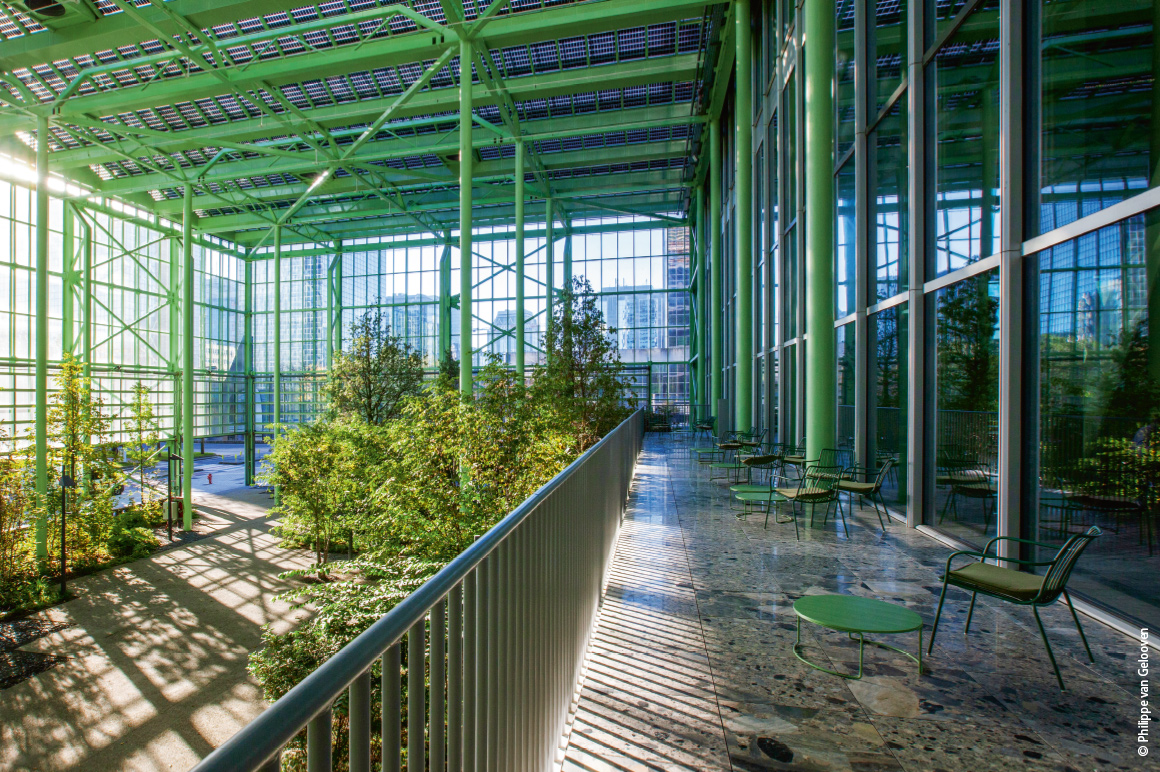
The ambitious retrofit project represents a new way of working and combines this with various other functions in an innovative manner. Across 31 floors, the 128 m high ZIN in Noord building comprises 70,000 m² of office space (of which the Flemish government uses 55,000 m²), around 5,000 m² of coworking workspaces as well as 127 apartments, a hotel with 240 rooms, and a public parking garage with 1,200 parking spaces for cars and bicycles. Other elements of the campus include public areas with sports, leisure and retail facilities, cafés and restaurants as well as a multi-storey glass atrium.
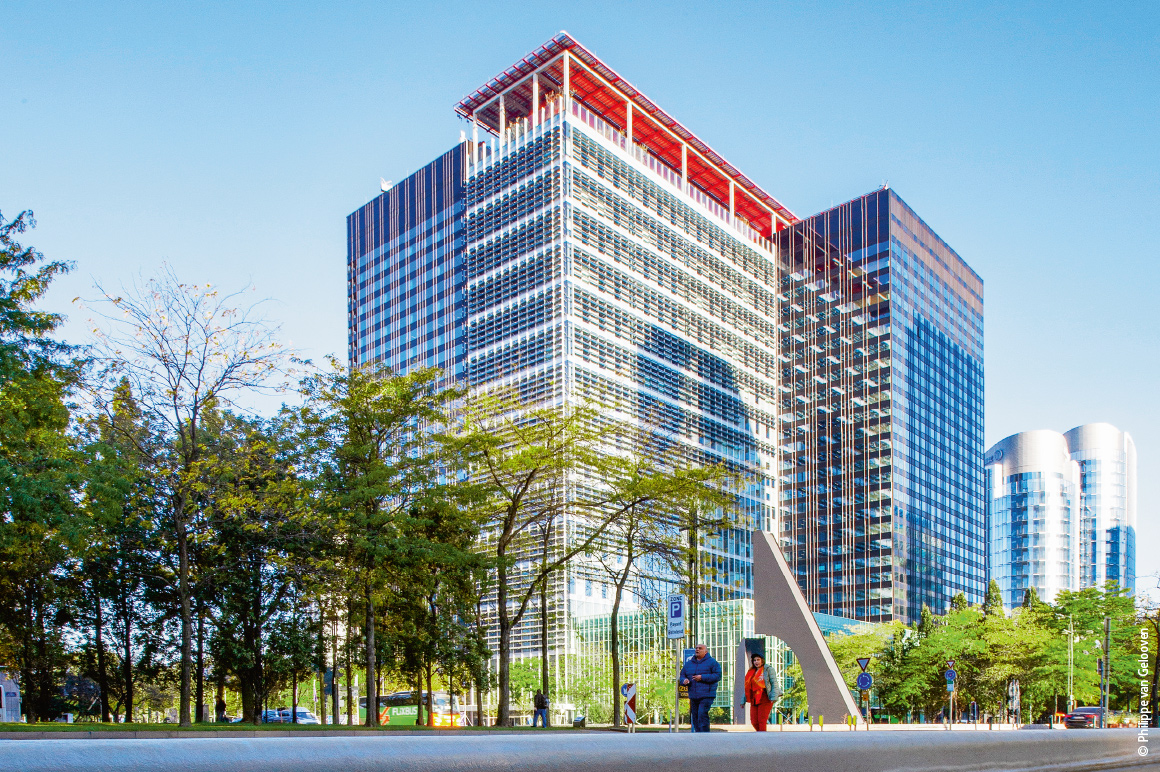
Alongside its extraordinary dimensions, the project also sets a benchmark in terms of the circular economy: two office towers from the 1970s were completely gutted, reused as much as possible, and their traffic routes were retained.
Sustainable design and climate control
The aim is for the building to be operated sustainably wherever possible. “For example, as an investor the Flemish authorities have stipulated that energy consumption must decrease every year,” explains Pascal Kinoo, Sales Manager for Smart and Sustainable Building Management at VMA. An intelligent facade ensures comfort in an energy-efficient way. Solar panels on the outside provide energy and protection from the sun at the same time.
The intelligent window control also supports energy-efficient operation: the automatically controlled windows allow fresh air into the interior during the day and enable natural cooling at night. If the light goes out in a room, its windows can be set to close automatically. The light in the corridors is linked to the elevator control system, which means it is only switched on shortly before the elevator door opens. The roofs of the building and atrium are also equipped with solar panels. Heat and cold for climate control are generated by a geothermal system that covers over 60% of the energy requirement. “In order to combine and control all these functions efficiently, a building management system that integrates all technical systems is essential,” explains Pascal Kinoo.
With this in mind, the system integrator VMA from Sint-Martens-Latem – which specializes in energy savings, energy flow management, and building automation – implemented its Vmanager building management system (BMS) and integrated all relevant components of the building technology.
Technical systems consolidated on one platform
As a multi-technical specialist, VMA was responsible for approximately 95% of all technical equipment installed in ZIN in Noord: HVAC, illumination, electricity, plumbing, and fire protection technology – all systems were integrated into the BMS. “Not an easy task given the size of the project,” recalls Dirk Stradiot, software developer at VMA. He was given the task of seamlessly integrating all systems into Vmanager. Ultimately, thanks to the openness and performance capability of PC-based control from Beckhoff, VMA was able to implement all the requirements.
“For this large and very comprehensive project, we needed a partner with a lot of experience in building automation who could support the numerous interfaces and protocols of the various disciplines. In addition, the open control platform enables us to program all functions efficiently,” says Dirk Stradiot, explaining the decision in favor of PC-based control from Beckhoff. The different ways in which the building is used and the resulting programming requirements created additional complexity. Dirk Stradiot dealt with this by employing an unusual approach for this project: “In standard projects, all settings are programmed, but with ZIN in Noord the user can still adjust various parameters.”
Interfaces consolidated on embedded PCs and couplers
In addition to CX5230 Embedded PCs as the heart of the building automation system, BK9050 TCP/IP Bus Couplers were integrated to collect various signals. “This simple method, which can be connected via Ethernet and is particularly reliable, is rarely used in building automation, but has reduced the cost and installation time of the many components,” explains Ronny Noynaert, Sales Beckhoff Belgium.
In line with the size of the project, the quantities involved are extensive: 69 CX5230 Embedded PCs with different I/O configurations and 120 BK9050 TCP/IP Bus Couplers record the data from the various sub-systems and control the different components. The stations feature a total of 765 DALI/DALI-2 Bus Terminals (KL6821), 82 KNX/EIB Bus Terminals (KL6301), 278 1-channel communication interfaces for controlling blinds (KL6831 and KL6841), and 139 1-channel communication interfaces (KL6041). VMA uses KL8519 16-channel digital input signaling modules and KL8528 8-channel digital output modules as the operating and display level on site in the technical rooms.
In order to be able to work independently during planning and programming, the technology was split up. “The illumination and everything that has a direct impact on the user experience of hotel guests and office staff was separated from the “slow” HVAC technology,” explains Dirk Stradiot. With TwinCAT as the engineering platform, VMA was able to program all functions, including those of a sophisticated nature. Pascal Kinoo cites the illumination in the parking garage as an example. “The illumination is generally dimmed and is only set to 100% when the motion sensors detect vehicles or people in a particular area.” This measure alone saves a lot of energy.
Teamwork across company boundaries
In addition to PC-based control, Dirk Stradiot cites the constructive cooperation with the engineering office VK Engineering and the rest of the project team as another factor in the success of the project. “Everyone worked very pragmatically to find the best solution for the building. When problems arose, a solution was sought together with the very capable Beckhoff team instead of pointing the finger at others. Furthermore, with a conventional installation, we would have needed ten times as much space for the electrical installation.”
All data is transferred to Vmanager as the central monitoring system via OPC UA. This gives the technicians an overview of all building information so that they can intervene down to component level if necessary. “OPC UA also facilitates communication between the Beckhoff hardware/software and our software,” explains Pascal Kinoo.
At ZIN in Noord, all areas are now visualized in Vmanager thanks to the combination of VMA expertise with PC-based control technology from Beckhoff. The acceptance test for the complete building automation system took place at the end of January 2025, one year after the first users moved in. Considering the size of the project and the complexity of the installation and control, there were very few fault tickets – and these were more than balanced out by all the positive feedback. Pascal Kinoo comments: “It’s wonderful to see how everything works and fits together.”
Further information


